in what type of society is it easiest to defend against terrorism
16.iii Terrorism
Learning Objectives
- Explain why terrorism is difficult to define.
- Listing the major types of terrorism.
- Evaluate the law enforcement and structural-reform approaches for dealing with terrorism.
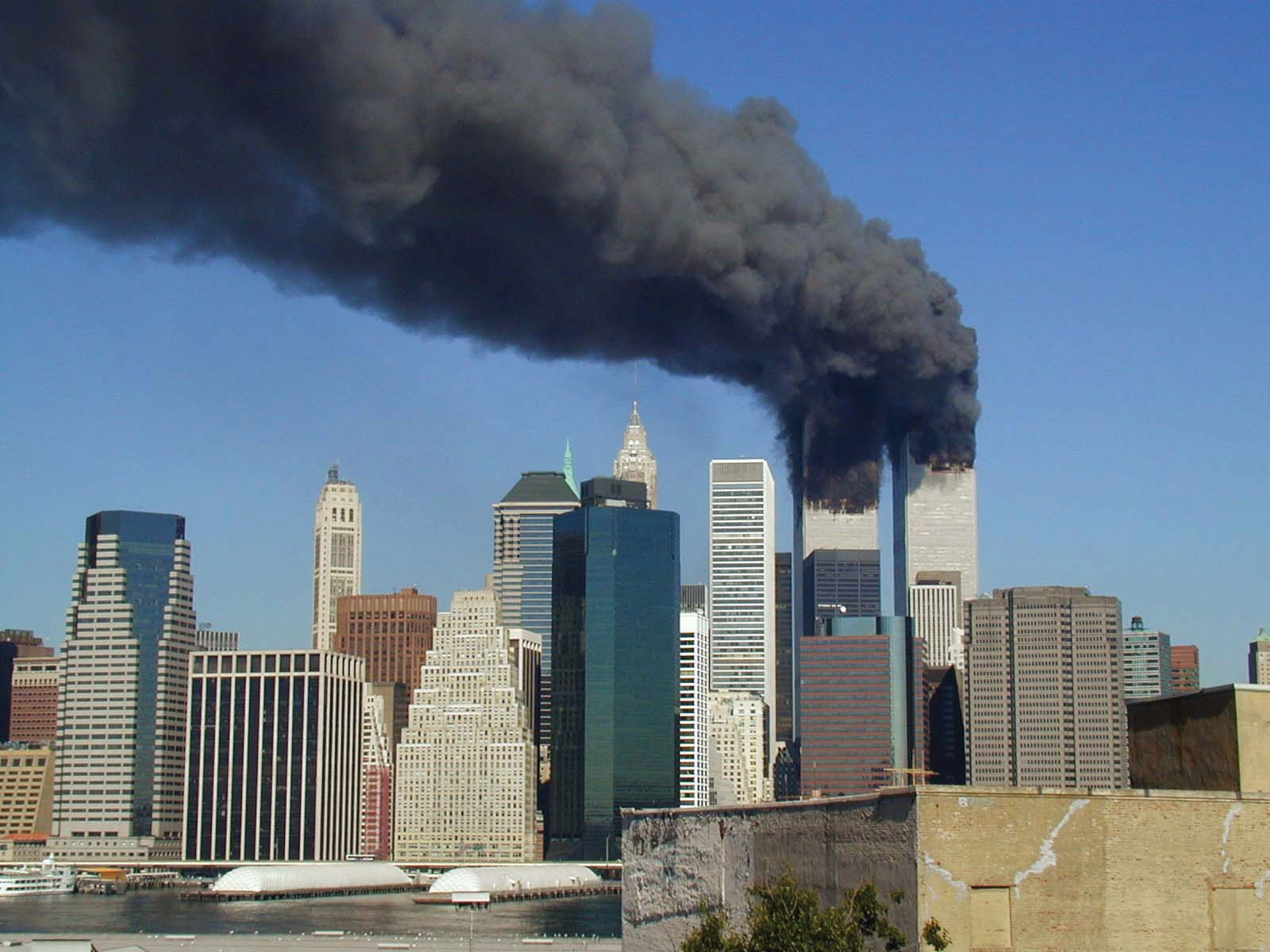
The 9/11 attacks spawned an immense national security network and prompted the expenditure of more $3 trillion on the state of war against terrorism.
Terrorism is hardly a new phenomenon, only Americans became horrifyingly familiar with information technology on September xi, 2001. The 9/eleven attacks remain in the nation's consciousness, and many readers may know someone who died on that terrible day. The attacks too spawned a vast national security network that at present reaches into near every aspect of American life. This network is so secretive, so huge, and and so expensive that no one actually knows precisely how large information technology is or how much it costs (Priest & Arkin, 2010). Nonetheless, it is thought to include 1,200 authorities organizations, i,900 individual companies, and almost 900,000 people with security clearances (Applebaum, 2011). The United States has spent an estimated $3 trillion since 9/11 on the war on terrorism, including more than $ane trillion on the wars in Republic of iraq and Afghanistan whose relevance for terrorism has been sharply questioned. Questions of how all-time to deal with terrorism continue to be debated, and there are few, if any, easy answers to these questions.
Not surprisingly, sociologists and other scholars take written many articles and books about terrorism. This section draws on their work to discuss the definition of terrorism, the major types of terrorism, explanations for terrorism, and strategies for dealing with terrorism. An understanding of all these issues is essential to make sense of the concern and controversy about terrorism that exists throughout the globe today.
Defining Terrorism
There is an former saying that "one person'south freedom fighter is another person'southward terrorist." This saying indicates some of the issues in defining terrorism precisely. Some years ago, the Irish Republican Army (IRA) waged a entrada of terrorism against the British government and its people every bit part of its effort to drive the British out of Northern Ireland. Many people in Northern Ireland and elsewhere hailed IRA members as freedom fighters, while many other people condemned them as cowardly terrorists. Although most of the world labeled the 9/11 attacks as terrorism, some individuals applauded them as acts of heroism. These examples indicate that there is but a sparse line, if whatsoever, between terrorism on the 1 mitt and freedom fighting and heroism on the other paw. Just as beauty is in the eyes of the beholder, then is terrorism. The same blazon of activity is either terrorism or freedom fighting, depending on who is characterizing the activity.
Although dozens of definitions of terrorism be, most take into account what are widely regarded as the three defining features of terrorism: (a) the use of violence; (b) the goal of making people afraid; and (c) the desire for political, social, economic, and/or cultural modify. A popular definition by political scientist Ted Robert Gurr (1989, p. 201) captures these features: "The utilise of unexpected violence to intimidate or coerce people in the pursuit of political or social objectives."
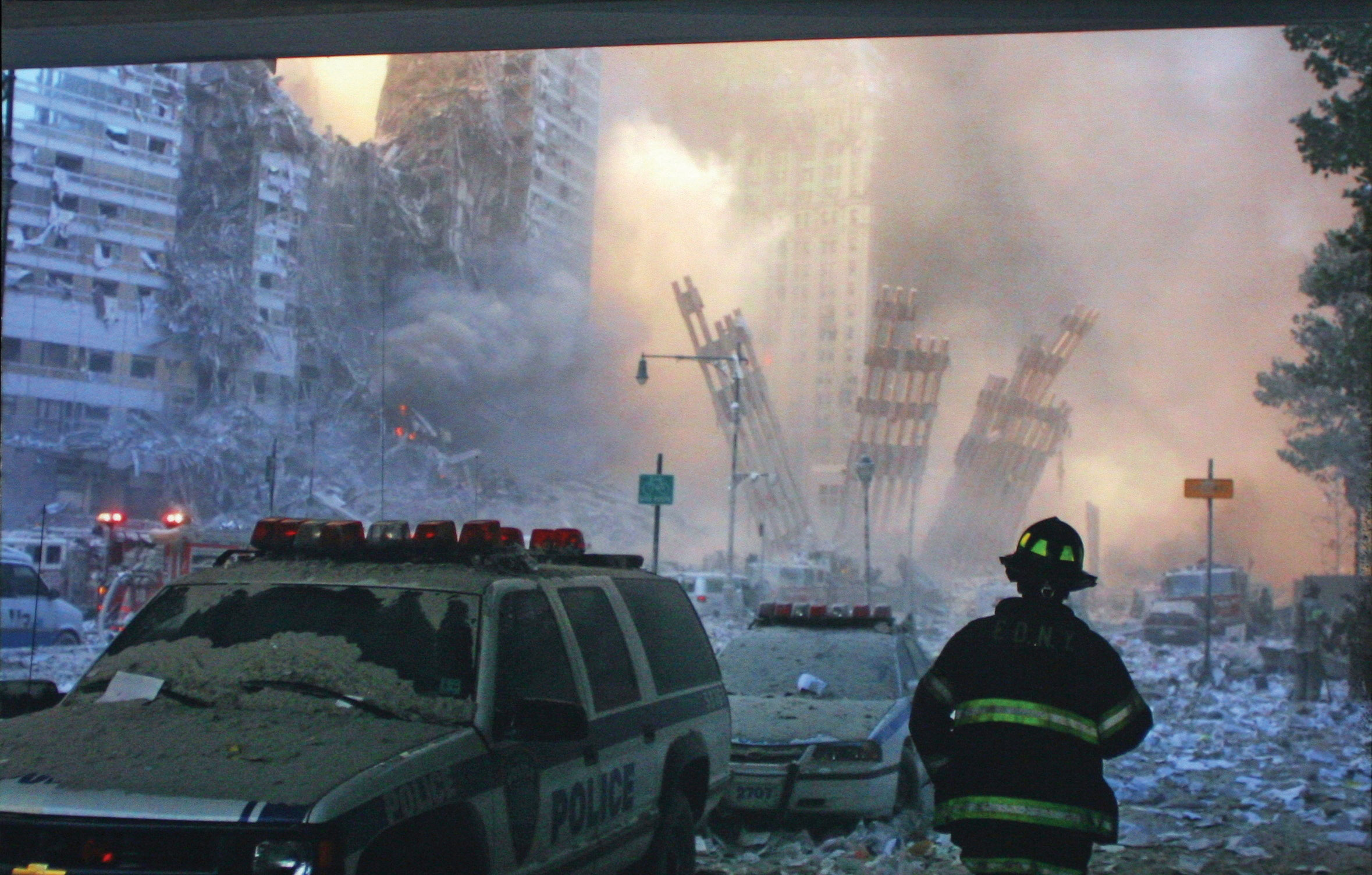
As the attacks on nine/xi remind us, terrorism involves the use of indiscriminate violence to instill fear in a population and thereby win certain political, economical, or social objectives.
Types of Terrorism
When nosotros think about this definition, 9/11 certainly comes to mind, but there are, in fact, several kinds of terrorism—based on the identity of the actors and targets of terrorism—to which this definition applies. A typology of terrorism, over again by Gurr (1989), is popular: (a) vigilante terrorism, (b) insurgent terrorism, (c) transnational (or international) terrorism, and (d) land terrorism. Tabular array 16.3 "Types of Terrorism" summarizes these four types.
Table sixteen.3 Types of Terrorism
| Vigilante terrorism | Violence committed by individual citizens against other private citizens. |
| Insurgent terrorism | Violence committed by private citizens confronting their own regime or against businesses and institutions seen as representing the "institution." |
| Transnational terrorism | Violence committed by citizens of one nation against targets in another nation. |
| Country terrorism | Violence committed by a government against its own citizens. |
Vigilante terrorism is committed by private citizens against other private citizens. Sometimes the motivation is racial, ethnic, religious, or other hatred, and sometimes the motivation is to resist social change. The violence of racist groups similar the Ku Klux Klan was vigilante terrorism, as was the violence used by white Europeans against Native Americans from the 1600s through the 1800s. What we now telephone call "hate crime" is a contemporary example of vigilante terrorism.
Insurgent terrorism is committed by private citizens against their own government or against businesses and institutions seen equally representing the "institution." Insurgent terrorism is committed by both left-fly groups and right-wing groups and thus has no political connotation. US history is filled with insurgent terrorism, starting with some of the actions the colonists waged against British forces before and during the American Revolution, when "the meanest and virtually squalid sort of violence was put to the service of revolutionary ethics and objectives" (Dark-brown, 1989, p. 25). An example here is tarring and feathering: hot tar and and then feathers were smeared over the unclothed bodies of Tories. Some of the labor violence committed subsequently the Civil War also falls under the category of insurgent terrorism, as does some of the violence committed past left-wing groups during the 1960s and 1970s. A relatively recent example of right-fly insurgent terrorism is the infamous 1995 bombing of the federal building in Oklahoma City past Timothy McVeigh and Terry Nichols that killed 168 people.
Transnational terrorism is committed by the citizens of one nation against targets in another nation. This is the type that has most concerned Americans at least since 9/11, yet 9/11 was not the first time Americans had been killed past international terrorism. A decade before, a truck bombing at the World Trade Center killed six people and injured more than than 1,000 others. In 1988, 189 Americans were among the 259 passengers and crew who died when a plane bound for New York exploded over Lockerbie, Scotland; agents from Libya were widely idea to accept planted the bomb. Despite all these American deaths, transnational terrorism has actually been much more than mutual in several other nations: London, Madrid, and various cities in the Middle Eastward have oftentimes been the targets of international terrorists.
Land terrorism involves violence past a regime that is meant to frighten its ain citizens and thereby stifle their dissent. State terrorism may involve mass murder, assassinations, and torture. Any its form, state terrorism has killed and injured more people than all the other kinds of terrorism combined (Gareau, 2010). Genocide, of grade is the most deadly blazon of state terrorism, just state terrorism likewise occurs on a smaller scale. As just i example, the tearing response of Southern white law enforcement officers to the ceremonious rights protests of the 1960s amounted to land terrorism, as officers murdered or beat out hundreds of activists during this menstruation. Although state terrorism is usually linked to authoritarian regimes, many observers say the US government also engaged in state terror during the nineteenth century, when US troops killed thousands of Native Americans (D. A. Brown, 2009).
Explaining Terrorism
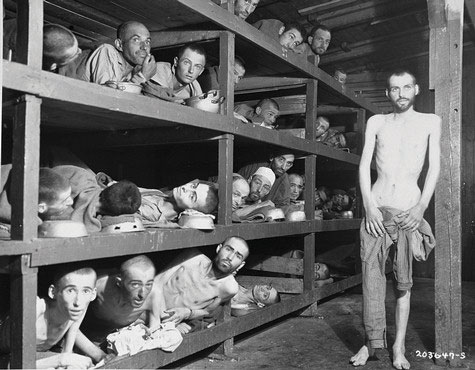
Genocide is the most deadly type of state terrorism. The Nazi holocaust killed some 6 one thousand thousand Jews and half-dozen million other people.
Why does terrorism occur? It is piece of cake to assume that terrorists must take psychological problems that lead them to take sadistic personalities, and that they are simply acting irrationally and impulsively. However, virtually researchers agree that terrorists are psychologically normal despite their murderous violence and, in fact, are fiddling unlike from other types of individuals who use violence for political ends. As ane scholar observed, "Almost terrorists are no more or less fanatical than the young men who charged into Marriage cannon burn down at Gettysburg or those who parachuted backside German lines into France. They are no more or less roughshod and coldblooded than the Resistance fighters who executed Nazi officials and collaborators in Europe, or the American GI's ordered to 'pacify' Vietnamese villages" (Rubenstein, 1987, p. 5).
Gimmicky terrorists tend to come from well-to-do families and to exist well-educated themselves; ironically, their social backgrounds are much more advantaged in these respects than are those of common street criminals, despite the violence they commit.
If terrorism cannot be said to stem from individuals' psychological problems, then what are its roots? In answering this question, many scholars say that terrorism has structural roots. In this view, terrorism is a rational response, no thing how horrible it may be, to perceived grievances regarding economic, social, and/or political conditions (White, 2012). The heads of the US ix/eleven Committee, which examined the terrorist attacks of that day, reflected this view in the following assessment: "We face a ascent tide of radicalization and rage in the Muslim world—a trend to which our own actions have contributed. The enduring threat is not Osama bin Laden simply young Muslims with no jobs and no hope, who are angry with their own governments and increasingly see the The states equally an enemy of Islam" (Kean & Hamilton, 2007, p. B1). As this assessment indicates, structural conditions do not justify terrorism, of class, just they do help explicate why some individuals make up one's mind to commit it.
The Impact of Terrorism
The major impact of terrorism is apparent from its definition, which emphasizes public fearfulness and intimidation. Terrorism can piece of work, or so terrorists believe, precisely because it instills fearfulness and intimidation. Anyone who might have happened to be in or near New York City on 9/11 will always recall how terrified the local populace was to hear of the attacks and the fears that remained with them for the days and weeks that followed.
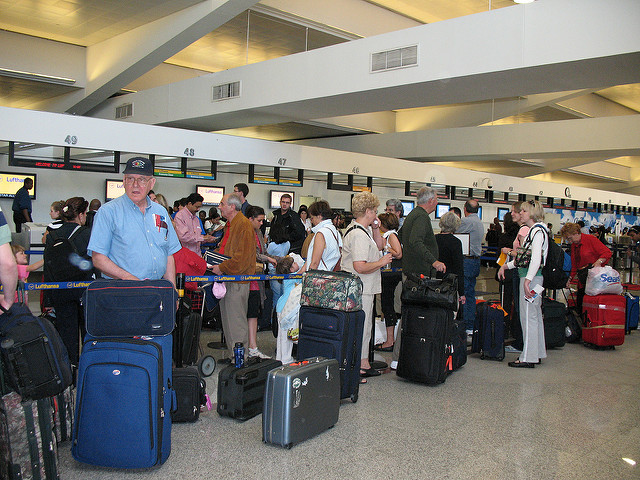
Hardly anyone likes standing in the long airport security lines that are a effect of the 9/eleven attacks. Some experts say that certain airport security measures are an unneeded response to these attacks.
Another pregnant impact of terrorism is the response to it. As mentioned earlier, the 9/11 attacks led the United States to develop an immense national security network that defies description and expense, as well as the Patriot Human action and other measures that some say threaten civil liberties; to offset the wars in Iraq and Afghanistan; and to spend more than $3 trillion in just 1 decade on homeland security and the state of war confronting terrorism. Airport security increased, and Americans have grown accustomed to having to take off their shoes, display their liquids and gels in containers limited to three ounces, and stand in long security lines every bit they endeavour to catch their planes.
People critical of these furnishings say that the "terrorists won," and, for better or worse, they may be correct. As 1 columnist wrote on the tenth anniversary of ix/xi, "And yet, ten years later nine/11, it'due south clear that the 'war on terror' was far as well narrow a prism through which to see the planet. And the price we paid to fight it was far also high" (Applebaum, 2011, p. A17). In this columnist's opinion, the war on terror imposed huge domestic costs on the United States; it diverted U.s.a. attention away from important issues regarding Mainland china, Latin America, and Africa; it aligned the United States with authoritarian regimes in the Middle East even though their absolutism helps inspire Islamic terrorism; and it diverted attending abroad from the need to invest in the American infrastructure: schools, roads, bridges, and medical and other research. In short, the columnist concluded, "in making Islamic terrorism our central priority—at times our simply priority—we ignored the economic, ecology and political concerns of the residue of the globe. Worse, we pushed bated our economic, environmental and political problems until they became too smashing to be ignored" (Applebaum, 2011, p. A17).
To critics similar this columnist, the threat to Americans of terrorism is "over-hyped" (Holland, 2011b). They acknowledge the 9/11 tragedy and the real fears of Americans, but they also point out that in the years since 9/11, the number of Americans killed in auto accidents, by air pollution, by homicide, or even by domestic dog bites or lightning strikes has profoundly exceeded the number of Americans killed by terrorism. They add that the threat is overhyped because defense manufacture lobbyists profit from overhyping it and because politicians practice not wish to exist seen equally "weak on terror." And they also worry that the war on terror has been motivated by and also contributed to prejudice against Muslims (Kurzman, 2011).
Fundamental Takeaways
- Terrorism involves the use of intimidating violence to reach political ends. Whether a given act of violence is perceived as terrorism or every bit freedom fighting often depends on whether someone approves of the goal of the violence.
- Several types of terrorism be. The 9/eleven attacks fall into the transnational terrorism category.
For Your Review
- Do you think the US response to the nine/11 attacks has been advisable, or practice you think it has been too overdone? Explain your answer.
- Practice you concur with the view that structural problems help explicate Center Eastern terrorism? Why or why non?
References
Applebaum, A. (2011, September ii). The price we paid for the war on terror. The Washington Post, p. A17.
Brown, D. A. (2009). Bury my centre at Wounded Knee: An Indian history of the American westward. New York, NY: Sterling Innovation.
Brown, R. M. (1989). Historical patterns of violence. In T. R. Gurr (Ed.), Violence in America: Protest, rebellion, reform (Vol. 2, pp. 23–61). Newbury Park, CA: Sage Publications.
Gareau, F. H. (2010). Land terrorism and the U.s.: From counterinsurgency to the war on terrorism. Atlanta, GA: Clarity Press.
Gurr, T. R. (1989). Political terrorism: Historical antecedents and gimmicky trends. In T. R. Gurr (Ed.), Violence in America: Protest, rebellion, reform (Vol. 2, pp. 201–230). Newbury Park, CA: Sage Publications.
Kingdom of the netherlands, J. (2011, September fourteen). How fearmongering over terrorism is endangering American communities. AlterNet. Retrieved from http://www.alternet.org/story/152403/how_fearmongering_over_terrorism_is_skewing_our_priorities_and_putting_us _all_at_risk_?page=entire.
Kean, T. H., & Hamilton, Fifty. H. (2007, September 9). Are we safer today? The Washington Mail service, p. B1.
Kurzman, C. (2011, July 31). Where are all the Islamic terrorists? The Chronicle of Higher Education. Retrieved from http://relate.com/article/Where-Are-All-the-Islamic/128443/?sid=cr&utm_source=cr&utm_medium=en.
Priest, D., & Arkin, Due west. M. (2010, July 20). A hidden world, growing beyond control. The Washington Mail, p. A1.
Rubenstein, R. Eastward. (1987). Alchemists of revolution: Terrorism in the modern world. New York, NY: Bones Books.
White, J. R. (2012). Terrorism and homeland security: An introduction (seventh ed.). Belmont, CA: Wadsworth.
langstonenjor1974.blogspot.com
Source: https://open.lib.umn.edu/socialproblems/chapter/16-3-terrorism/
0 Response to "in what type of society is it easiest to defend against terrorism"
Post a Comment